

- About us
- Young GNS
- Activities
- Careers
- Meetings

|
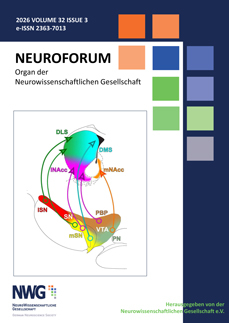
Neuroforum 2026 Issue 3
 |
News
|
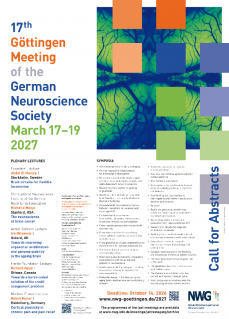
Göttingen Meeting 2027
 |
|
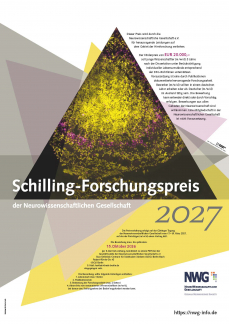
Schilling-Forschungspreis 2027
 |
|
FENS
 |
Prof. Dr. Gaia Tavosanis

Prof. Dr. Gaia Tavosanis
Kandidatin "Schatzmeisterin"
RWTH Aachen Tel.: (+49) 0221 80 20870 E-Mail: gaia.tavosanis@devbiol.rwth-aachen.de Lab Website: https://www.devbiol.rwth-aachen.de/prof-dr-gaia-tavosanis/ |
Curriculum Vitae |
|||||||||||||||||||||||||
|
|||||||||||||||||||||||||
Scientific education
|
| 1995-1999 | PhD student in the laboratory of Dr. C. Gonzalez, EMBL, Heidelberg, Germany |
| 1999 | Post-doctoral work in the laboratory of Dr. C. Gonzalez (EMBL- Cell Biology Postdoctoral Fellowship) |
| 2000-2002 | Post-doc in the laboratory of Prof. Dr. Yuh-Nung Jan, UCSF, San Francisco, CA, USA (DFG Postdoctoral Grant) |
| 2003-2011 | Junior Group Leader at the MPI of Neurobiology, Munich, Germany |
| 2011-2016 | Research Group Leader (W2 level) at the DZNE, Bonn, Germany |
| 2016-2022 | Research Group Leader (W3 level) at the DZNE, Bonn, Germany |
| 2017-2022 | Research Group Leader (W3 level) at the DZNE, Bonn |
| 2017-2022 | Full Professor of Neurogenetics (W3) at the University of Bonn |
| 2022-present | Full Professor, Chair of Developmental Biology (W3) at the RWTH Aachen |
Research focus
My group investigates how architectural constrains in the nervous system define the processing of information- from the cellular to the circuit level. We implement high resolution imaging to investigate how dendrites differentiate in vivo and how they can be modified upon changes of sensory stimuli in the adult nervous system. We combine this microscopy approach with cutting-edge Drosophila genetics and molecular biology to investigate molecularly the cellular mechanisms of dendrite branching. Using these approaches, we have demonstrated that distinct molecular regulation of the cytoskeleton underlies the diversity of dendrite morphologies observed among neuronal types. Indeed, actin regulation and nucleation of microtubules both play a central role in our research, as major players in establishment and plasticity of cellular architecture. We postulate that same or similar molecular players are involved in the initial establishment and in the physiological dynamic remodelling of the adult nervous system. Therefore, we have identified and characterized circuits in the adult nervous system of Drosophila that allow us to address plastic changes and have demonstrated that developmental circuit assembly in Drosophila depends on modulation of input activity. To investigate the functional outcome of synaptic remodelling and of structural cellular modifications, we have established behavioural paradigms, including learning and memory essays, and have set up functional imaging using genetically encoded calcium indicators and two-photon microscopy. With these tools, we have reported circuit rewiring accompanying memory consolidation in the adult fly brain. Thus, we investigate the structural, molecular, functional and behavioural outcome of the nervous system plastic response to a modified environment.
Selected Publications
-
Chan I, Kalle Kossio F, Tavosanis G. (2026) Biased connectivity shapes food odor categorization in the Drosophila mushroom body. Cell Reports 45, 10: 117911
DOI: 10.1016/j.celrep.2026.117911 -
Ziegler AB*, Wesselmann C, Beckschäfer K, Wulf A-L, Dhiman N, Soba P, Thiele C, Bauer R, Tavosanis G.* (2025) Lipid Disbalance Affects Neuronal Dendrite Growth and Maintenance in a Human Ceramide Synthase Disease Model.
PLoS Genetics 21(9):e1011880. doi: 10.1371/journal.pgen.1011880 (*shared senior and corresponding authorship). -
Karge RA, Fischer FP, Schüth H, Wechner A, Peter S, Kilo L, Dichter M, Voigt A, Tavosanis G, van Loo KMJ, Koch H, Weber YG, Wolking S. (2025) Modeling AP2M1 developmental and epileptic encephalopathy in Drosophila.
Dis Model Mech. doi: 10.1242/dmm.052419. -
Bayar S, Seep L, Doubková K, Zurkovic J, Bülow MH, Kierdorf K, Bauer R, Thiele C, Tavosanis G, Hasenauer J, Mass E. (2025) Developmental programming by maternal obesity alters offspring lifespan and immune responses in a diet- and sex-specific manner.
Cells Dev. 183:204040. doi: 10.1016/j.cdev.2025.204040. -
Fuhrmann F, Nebeling FC, Musacchio F, Mittag M, Poll S, Müller M, Ambrad Giovannetti E, Maibach M, Schaffran B, Burnside E, Chan ICW, Lagurin AS, Reichenbach N, Kaushalya S, Fried H, Linden S, Petzold GC, Tavosanis G, Bradke F, Fuhrmann M. (2025) Three-photon in vivo imaging of neurons and glia in the medial prefrontal cortex with sub-cellular resolution.
Commun Biol. 8(1):795. doi: 10.1038/s42003-025-08079-8. -
Zhang Y.*, Sung H.-H. *, Ziegler A.B.*§, Wu Y.-C. *, Viais R., Sánchez-Huertas C., Agrican F.-G., Cheng Y.-J., Mouri K., Uemura T., Lüders J., Chien C.-T.§ and Tavosanis G. (2024)
Augmin complex activity fine-tunes dendrite morphology through non-centrosomal microtubule nucleation in vivo.
Journal of Cell Science 137(9):jcs261512. doi: 10.1242/jcs.261512. (*shared first and § corresponding authorship). -
Nitta Y., Kawai H., Maki R., Osaka J., Hakeda-Suzuki S., Nagai Y., Doubková K., Uehara T., Watanabe K., Kosaki K., Suzuki T., Tavosanis G. and Sugie A. (2023)
Direct evaluation of neuroaxonal degeneration with the causative genes of neurodegenerative diseases in Drosophila using the automated axon quantification system, MeDUsA.
Hum Mol Genet. ddac307. doi: 10.1093/hmg/ddac307. -
Richard M., Doubková K., Nitta Y., Kawai H., Sugie A.*, Tavosanis G.* (2022)
A quantitative model of sporadic axonal degeneration in the Drosophila visual system
Journal of Neuroscience 42(24):4937-4952. doi: 10.1523/JNEUROSCI.2115-21.2022.
(*shared corresponding authorship). -
Stürner T., Ferreira Castro A., Philipps M., Cuntz H.* and Tavosanis G.* (2022)
The branching code: a model of actin-driven dendrite arborisation.
Cell Reports 39(4):110746. doi: 10.1016/j.celrep.2022.110746.
(*shared senior and corresponding authorship). -
Prisco L., Deimel S.H., Yeliseyeva H., Fiala A. and Tavosanis G. (2021)
The anterior paired lateral neuron normalizes odour-evoked activity in the Drosophila mushroom body calyx.
eLife 10:e74172 doi: 10.7554/eLife.74172