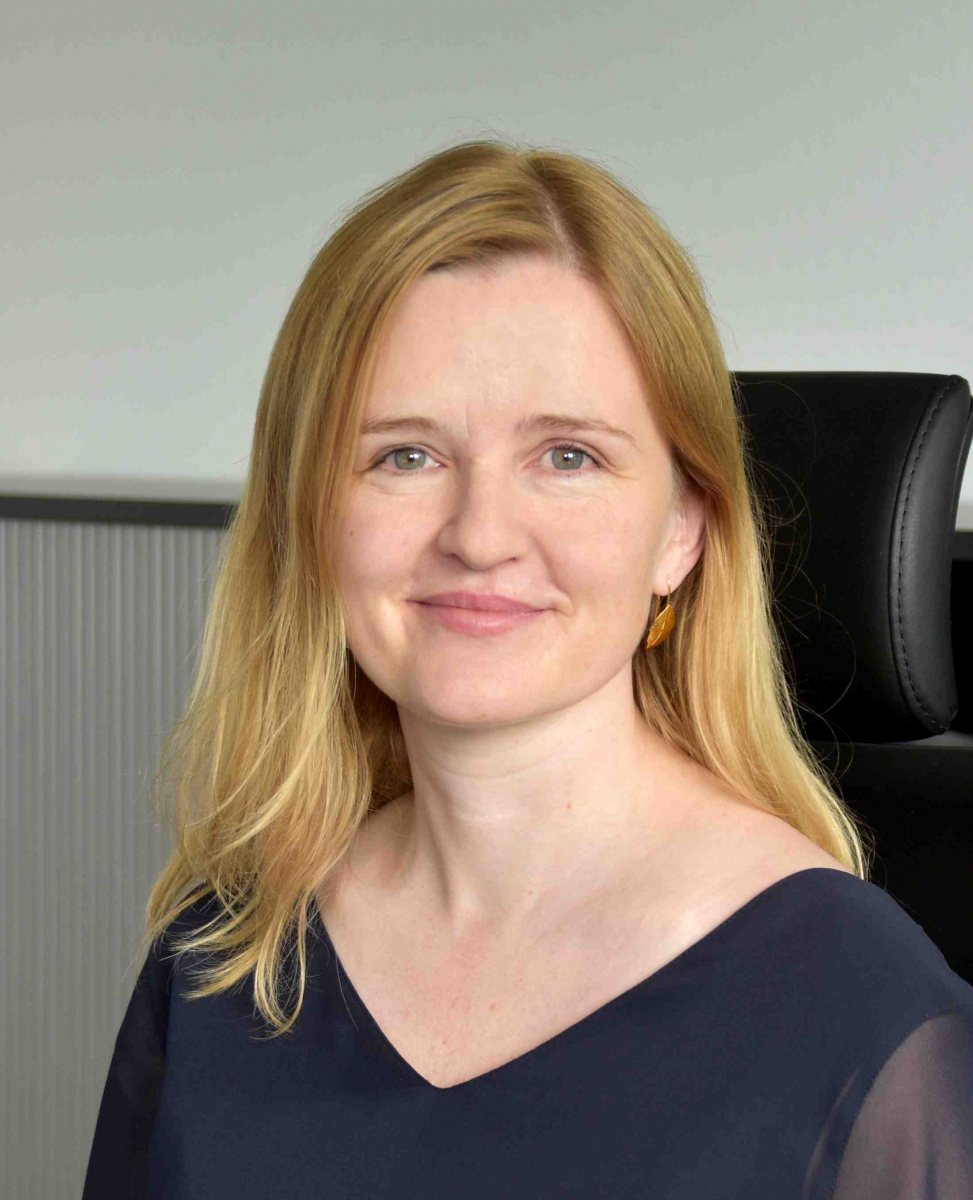
Werdegang
|
seit 2019 |
Univ.-Professorin (W3), Direktorin, Institut für Pharmakologie, Toxikologie und Pharmazie, Stiftung Tierärztliche Hochschule Hannover |
|
2017 |
Habilitation in Pharmakologie und Toxikologie an der Veterinärmedizinischen Fakultät der Universität Leipzig und Abschluss zur Fachtierärztin für Pharmakologie und Toxikologie |
|
2012-2019 |
Wissenschaftliche Mitarbeiterin, Privatdozentin, Institut für Pharmakologie, Pharmazie und Toxikologie, Veterinärmedizinische Fakultät der Universität Leipzig |
|
2009-2012 |
Assistant Researcher (Faculty, Professional Research Series)
University of California Los Angeles (UCLA, USA), David Geffen School of Medicine, Department of Neurology |
|
2007-2009 |
Postdoctoral Scholar als Feodor-Lynen-Fellow der Alexander von Humboldt Foundation, University of California Los Angeles (UCLA, USA), David Geffen School of Medicine, Department of Neurology, Laboratory of Prof. Dr. Marie-Francoise Chesselet |
|
2007 |
Postdoc (Deutsche Forschungsgemeinschaft), Institut für Pharmakologie und Toxikologie, Fachbereich Veterinärmedizin, Freie Universität Berlin |
|
2004-2007 |
Promotion (Berlin excellence program, NaFöG), Institut für Pharmakologie und Toxikologie, Fachbereich Veterinärmedizin, Freie Universität Berlin, Dissertation in Neuropharmakologie mit Abschluss “summa cum laude” |
|
1998-2003 |
Studium der Veterinärmedizin, Fachbereich Veterinärmedizin, Freie Universität Berlin, Abschluss Staatsexamen |
Ausgewählte Auszeichnungen und Aktivitäten
|
seit 2026
|
Spokesperson, Research Integration Unit VENOM (Neuroinfection), University of Veterinary Medicine Hannover |
|
seit 2025 |
Board Member and Equal Opportunities Spokesperson, DFG Collaborative Research Centre 1270 ELAINE |
|
seit 2024 |
Elected Chair of the Board, Center for Systems Neuroscience Hannover, comprising 58 neuroscience research groups across four universities |
|
seit 2023 |
Spokesperson, Neuropharmacology/Toxicology Section and Board Member German Neuroscience Society (NWG) |
|
seit 2023 |
Student-elected Liaison Professor (Vertrauensdozentin) |
|
2022 und 2023 |
Best Teacher of the Year in Clinical Subjects, elected by students |
|
2021 |
“Professor of the Year,” second prize nationwide in Medicine and Natural Sciences, awarded by the UNICUM Foundation and federal ministries. |
|
seit 2020 |
Chair of the Equal Opportunities Commission and Founding Member of the Diversity Commission, University of Veterinary Medicine Hannover |
|
seit 2020 |
Vice Chair, PhD Programme in Systems Neuroscience, jointly offered by the University of Veterinary Medicine Hannover, Hannover Medical School, Leibniz University Hannover, and Hannover University of Music, Drama and Media |
|
seit 2019 |
Associate Editor, Naunyn-Schmiedeberg’s Archives of Pharmacology |
|
2012–2019 |
Animal Welfare Officer, Faculty of Veterinary Medicine, Leipzig University, and Max Planck Institute for Evolutionary Anthropology, Leipzig |
|
2016 |
Minerva Short-Term Research Award for a research visit to the Weizmann Institute of Science, Israel |
|
2007–2009 |
Feodor Lynen Postdoctoral Fellowship, Alexander von Humboldt Foundation |
|
2004–2006 |
Graduate Fellowship, Berlin Excellence Programme (NaFöG) |
|
Forschungsgebiete
My research focuses on developing disease-modifying therapies for neurological disorders caused by neurodegeneration, particularly proteinopathies and synucleinopathies, or neuronal dysfunction, such as dystonia. We characterize animal models and investigate disease mechanisms to identify novel therapeutic targets, followed by pre-clinical drug studies. Specific interests include infectious agents as triggers of proteinopathies in the peripheral and central nervous systems; the prion-like spread of α-synuclein pathology; interactions between the peripheral immune and nervous systems; and molecular pathways underlying sex differences.
Ausgewählte Publikationen
-
Lau K, Outeiro TF, Richter F. Rodent models and accompanying in vitro strategies for studying the etiology and therapy of Parkinson’s disease. Journal of Parkinson’s Disease. 2026;16(6):1074–1093. doi:10.1177/1877718X261463389
-
Baldauf L, Feja M, Stanojlovic M, Strowig T, Visscher C, Schaeffer E, Berg D, Hankel J, Richter F. Depending on intensity, exercise improved or worsened pathology in a model of prodromal Parkinson’s disease. npj Parkinson’s Disease. 2025;11:335. doi:10.1038/s41531-025-01200-y
-
Feja M, Drath I, Weiß S, Ewe A, Gericke B, Outeiro TF, Stefanis L, Aigner A, Richter F. Nose-to-brain siRNA delivery by PEI/PPI-based nanoparticles reduces α-synuclein expression in a Parkinson’s disease mouse model. Molecular Therapy – Nucleic Acids. 2025;36(3):102671. doi:10.1016/j.omtn.2025.102671
-
Schreiber CS, Navarro Ramil L, Bieligk J, Meineke R, Rimmelzwaan G, Käufer C, Richter F. Intravenous SARS-CoV-2 Spike protein induces neuroinflammation and alpha-Synuclein accumulation in brain regions relevant to Parkinson’s disease. Brain, Behavior, and Immunity. 2025;129:102–123. doi:10.1016/j.bbi.2025.05.021
-
Lai TT, Xiang W, Stanojlovic M, Käufer C, Feja M, Lau K, Zunke F, Richter F. The basolateral amygdala and striatum propagate alpha-synuclein pathology causing increased fear response in a Parkinson’s disease model. Brain, Behavior, and Immunity. 2025;128:469–486. doi:10.1016/j.bbi.2025.04.025
-
Schidlitzki A, Stanojlovic M, Fournier C, Käufer C, Feja M, Gericke B, Garzotti M, Welford RWD, Steiner MA, Angot E, Richter F. Double-Edged Effects of Venglustat on Behavior and Pathology in Mice Overexpressing α-Synuclein. Movement Disorders. 2023;38(6):1044–1055. doi:10.1002/mds.29398
-
Käufer C, Schreiber CS, Hartke AS, Denden I, Stanelle-Bertram S, Beck S, Kouassi NM, Beythien G, Becker K, Schreiner T, Schaumburg B, Beineke A, Baumgärtner W, Gabriel G, Richter F. Microgliosis and neuronal proteinopathy in brain persist beyond viral clearance in SARS-CoV-2 hamster model. EBioMedicine. 2022;79:103999. doi:10.1016/j.ebiom.2022.103999
-
Torres ERS, Stanojlovic M, Zelikowsky M, Bonsberger J, Hean S, Mulligan C, Baldauf L, Fleming S, Masliah E, Chesselet MF, Fanselow MS, Richter F. Alpha-synuclein pathology, microgliosis, and parvalbumin neuron loss in the amygdala associated with enhanced fear in the Thy1-aSyn model of Parkinson’s disease. Neurobiology of Disease. 2021;158:105478. doi:10.1016/j.nbd.2021.105478
-
Helmschrodt C, Höbel S, Schöniger S, Bauer A, Bonicelli J, Gringmuth M, Fietz SA, Aigner A, Richter A, Richter F. Polyethylenimine Nanoparticle-Mediated siRNA Delivery to Reduce α-Synuclein Expression in a Model of Parkinson’s Disease. Molecular Therapy – Nucleic Acids. 2017;9:57–68. doi:10.1016/j.omtn.2017.08.013
-
Chesselet MF, Richter F. Modelling of Parkinson’s disease in mice. The Lancet Neurology. 2011;10(12):1108–1118. doi:10.1016/S1474-4422(11)70227-7
|